

Gartner predicts 55% of enterprise VMware users will be investigating an exit by 2029
Gartner predicts 55% of enterprise VMware users will be investigating an exit by 2029
The analyst firms latest Magic Quadrant for DHI - aka hybrid clouds - has the chasing pack facing problems too: with maturity, cost, and complex licences.
Published on 24th September 2026
Analyst firm Gartner believes over half of VMware users will start evaluating alternative hybrid cloud platforms yet still rates the Broadcom business unit a leader in two major markets.
Gartner predicted increased interest in VMware exits in its Magic Quadrant for Distributed Hybrid Infrastructure (DHI) – aka hybrid clouds – which opens with a “Strategic Planning Assumption” that “By 2029, 55 percent of enterprises will initiate proofs of concept for alternative distributed hybrid infrastructure products to replace their VMware-based deployments and embrace hybrid cloud infrastructure delivery, up from 25 percent in 2026.”
Gartner’s mention of 2029 feels noteworthy, because that year will be six years after Broadcom’s acquisition of VMware. As previously written, plenty of VMware users acquired fresh three-year subscriptions in the months before the deal closed. Migrating from VMware to a rival platform is a risky and complex project, and we often hear of customers deciding it is safer to stick with Broadcom for longer while they hatch plans. If orgs in that position refresh for another three-year sub during 2026, 2029 would be a natural jumping off point.
Numerous virtualisation contenders are trying to lure Virtzilla’s customers, yet progress is slow. Nutanix CEO Rajiv Ramaswami has often said it will be several years before some are ready to move. While Gartner predicts a majority of VMware customers will contemplate a move, the Broadcom business unit will keep most of its customers for at least another three years – and recently turned its attention to refreshing its low-end vSphere Standard product, a move that will give it a chance to retain more current users.
The DHI Magic Quadrant rates VMware as a leader in the field, alongside AWS, Nutanix, Microsoft and Oracle. Gartner rates VMware’s core virtualisation technology, formal sovereign cloud ecosystem, and AI-native infrastructure as strengths.
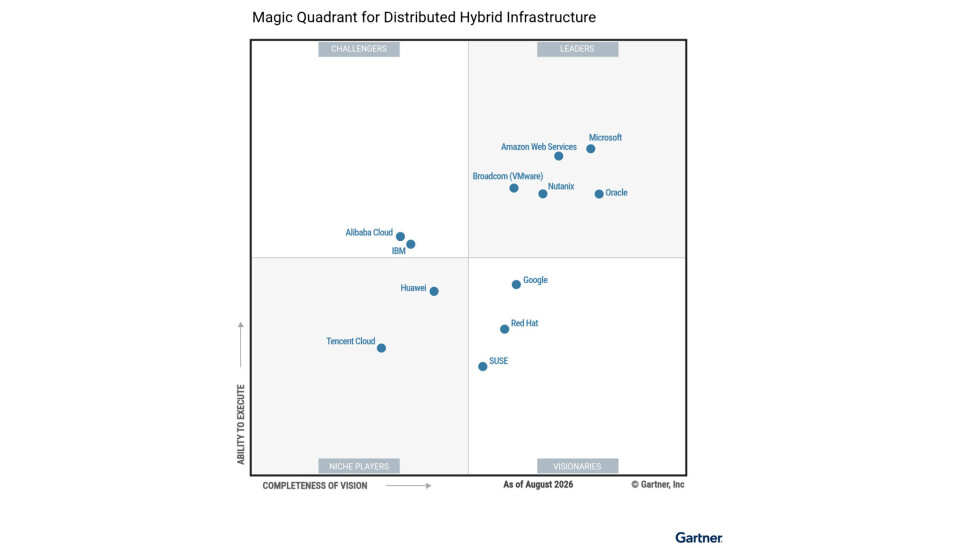
The first VMware weakness Gartner mentions makes for sobering reading: “VMware has experienced an increased level of negative sentiment from Gartner customers, particularly regarding communication, commercial business practices and delays in support, compared to other market leaders.”
The firm had similar things to say in another Magic Quadrant – this one dedicated to Server Virtualisation Platforms.
On this MQ, Gartner rated VMware as the technical leader in the field across all the use cases it considers, and praised its technology and AI integration. But the firm also felt it necessary to report negative customer sentiments.
“Gartner clients have reported that the transition to per-core subscriptions has resulted in significant cost increases. Many have also reported minimal flexibility during negotiations, which has forced many heads of I&O to actively evaluate migration alternatives.”
VMware isn’t alone in copping some criticism. On the DHI Magic Quadrant, Gartner states “Nutanix’s licensing and pricing models can be complex and less competitive than other market leaders” and notes that AWS’s on-prem Local Zones “carry a 15% to 35% price premium over their parent regions in expensive metros” and come with “substantial cost premiums.”
On the server virtualisation quadrant, Gartner warns that Nutanix “licensing can be complex and pricing frequently exceeds expectations. Clients should carefully evaluate the ROI of potential migrations.” The firm warns would-be Microsoft users that “Administrators must navigate multiple disjointed management consoles, including Azure Portal, Windows Admin Center and System Center Virtual Machine Manager, to perform routine operational tasks.”
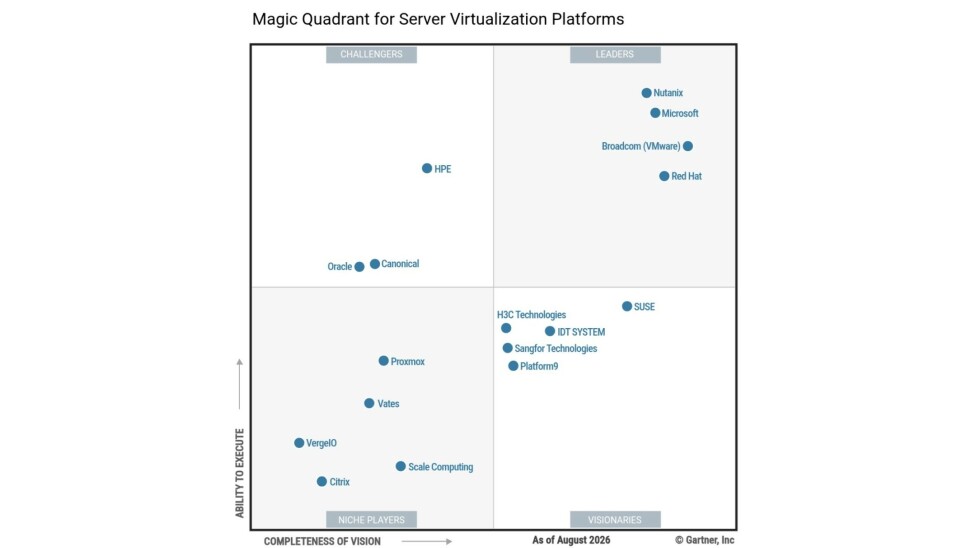
Gartner hasn’t published a server virtualisation Magic Quadrant for a decade, so this year’s document includes some new players.
HPE scored “Challenger” status, as Gartner feels its products lack important features and the company is yet to establish a track record in the field. Proxmox, which is often talked about as a VMware alternative for low-end users, scored Niche Player status due to lack of support for top-tier enterprise applications and its low headcount making the availability of support uncertain – a factor the outfit recently addressed by adding a North American office and 24×7 support.
Are you part of the 55%?
Planning a move, have moved, not contemplating one, or somewhere in between - we'd love to hear your story.
Get in touchSource
Image Credit
Nattasak Buranasri via Vecteezy